
Minnesota winters are no joke. Temperatures regularly drop below zero, and without the right insulation, your heating system works overtime just to keep up. Choosing the right insulation is not just about staying warm. It is about stopping air leaks, controlling moisture, and keeping energy bills from climbing every January. This post breaks down the most effective options for homes and buildings in Minnesota’s climate.
Key Takeaways
- Closed-cell spray foam offers the highest R-value per inch and the best air sealing for Minnesota cold.
- Blown-in insulation works well in attics and hard-to-reach spaces.
- Fiberglass batts are budget-friendly but require careful installation to perform well.
- Minnesota’s climate zone (Zones 6 and 7) requires higher R-values than most of the country.
- Air sealing matters as much as insulation thickness in cold climates.
- Northland Companies is SPFA-certified, with multiple Master Installers on staff.
Understanding Minnesota’s Insulation Demands
Minnesota sits in climate zones 6 and 7. The U.S. Department of Energy recommends attic insulation between R-49 and R-60 for these zones. That is significantly higher than what most older Minnesota homes currently have. If your home was built before the 1990s, there is a good chance your insulation falls short.
Cold climates also create a unique problem called thermal bridging. This is where heat escapes through framing, gaps, or thin spots in the insulation. Picking a product with a high R-value is only part of the answer. You also need proper installation and air sealing to see real results.
Why Air Sealing Matters in Cold Climates
Air leaks can account for 25 to 40 percent of a home’s heat loss. In Minnesota, that adds up fast. Insulation slows heat transfer, but it does not stop air movement on its own. Spray foam is one of the few insulation types that insulates and air seals at the same time. Other materials, like fiberglass batts, need additional air sealing measures to perform well.
Spray Foam Insulation: The Top Performer for Extreme Cold
Closed-cell spray foam is widely considered the best insulation option for cold Minnesota climates. It reaches R-values of around R-6 to R-7 per inch. It also creates a vapor barrier, which is critical in Minnesota where moisture trapped in walls can cause mold and structural damage over time.
Open-cell spray foam is a softer, less dense option. It runs around R-3.5 per inch and does not act as a vapor barrier. It works well in interior walls and some attic applications, but closed-cell is the stronger choice for exterior walls and crawl spaces in cold climates.
SPFA Certification: Why It Matters
Spray foam is only as good as the installer. Poor mixing, wrong temperatures during application, or incorrect thickness can all cause the product to fail. Northland Companies is one of a small number of Minnesota contractors certified through the Spray Polyurethane Foam Alliance (SPFA) Professional Certification Program. Their team includes multiple SPFA Master Installers, which is a credential most contractors in the region do not hold. When it comes to spray foam insulation, that level of expertise makes a real difference in how the job performs long term.
Blown-In Insulation: A Strong Choice for Attics
Blown-in insulation, also called loose-fill insulation, is one of the most practical choices for attics in Minnesota. Cellulose blown-in typically reaches R-3.5 per inch, and fiberglass blown-in runs around R-2.5 per inch. Both can be layered thick enough to hit the R-49 to R-60 target for Minnesota attics.
Blown-in insulation also fills irregular spaces and around obstructions better than batt insulation. If your attic has knee walls, odd framing, or existing insulation that needs topping off, blown-in is often the easiest and most effective solution. Northland Companies offers blown attic insulation as part of their full range of insulation services across northern Minnesota.
Best Applications for Blown-In
Blown-in works best in attics, finished walls where drilling access holes is possible, and areas where batt insulation is difficult to install. It is also commonly used in retrofit projects where homeowners are upgrading older homes. Because northern Minnesota has a large stock of older cabins and homes, this is one of the more frequently requested services in the region.
Fiberglass Batt Insulation: Budget-Friendly With Conditions
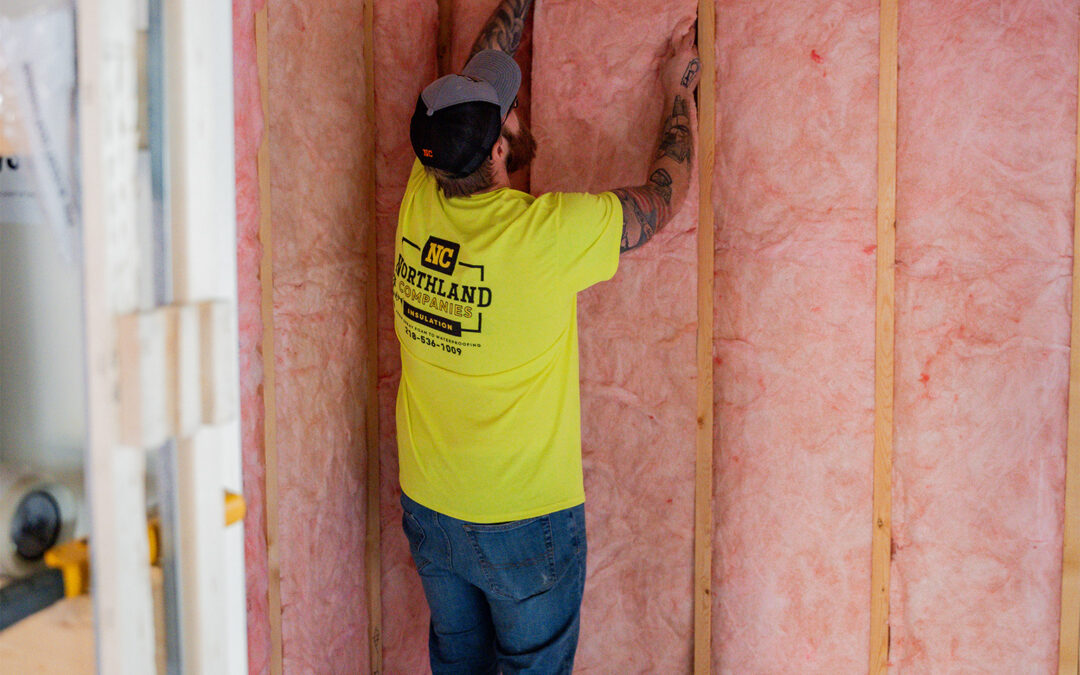
Fiberglass batts are the most familiar insulation product and one of the most affordable. They are sold in pre-cut rolls and are commonly used in walls, floors, and attics. In Minnesota, they can work well when installed correctly, but that last part is important. Gaps, compression, and poor fitting around electrical boxes or pipes all reduce performance.
For homes in climate zones 6 and 7, fiberglass batts alone often do not provide enough R-value without additional layers or air sealing measures. They are better used as part of a complete insulation strategy rather than a standalone solution. Learn more about how fiberglass batt insulation fits into a full home insulation plan.
When Fiberglass Batts Make Sense
Fiberglass batts are a smart choice for new construction where walls are open and installation is straightforward. They work well in combination with spray foam or blown-in insulation as part of a layered approach. For budget-conscious homeowners doing new builds, a hybrid system using batts in walls and spray foam in rim joists and crawl spaces is a common and effective strategy.
Frequently Asked Questions
What R-value do I need for a Minnesota home?
For most of Minnesota, which sits in climate zones 6 and 7, the U.S. Department of Energy recommends R-49 to R-60 for attics and R-20 or higher for walls. Crawl spaces and rim joists also need attention. Hitting these numbers in an older home often requires a combination of insulation types.
Is spray foam insulation worth it in Minnesota?
Yes, especially closed-cell spray foam. It delivers the highest R-value per inch, creates an air and vapor barrier, and performs well in extreme cold. Many Minnesota homeowners see meaningful reductions in heating costs after a proper spray foam installation. The key is working with a certified installer who knows how to apply it correctly.
What is the difference between open-cell and closed-cell spray foam?
Closed-cell spray foam is denser, reaches R-6 to R-7 per inch, and acts as a vapor barrier. Open-cell is softer, reaches around R-3.5 per inch, and allows moisture to pass through. In Minnesota’s cold climate, closed-cell is generally the better choice for exterior applications, crawl spaces, and rim joists.
Can I add insulation to my existing home without a full renovation?
Yes. Blown-in insulation is commonly used to upgrade attics in existing homes without tearing out drywall or doing major construction. Spray foam can be applied in crawl spaces and rim joists with minimal disruption. Many homeowners in northern Minnesota upgrade their insulation in stages as budget allows.
How do I know if my current insulation is performing well?
Rising heating bills, cold floors, drafts near windows or outlets, and ice dams on the roof in winter are all signs that your insulation may be underperforming. A professional energy assessment can identify specific problem areas. If you notice any of these signs, it is worth having your insulation evaluated before the next heating season.
Ready to Insulate Your Minnesota Home the Right Way?
The right insulation choice depends on your home, your budget, and where the biggest heat loss is happening. Spray foam handles extreme cold and moisture the best. Blown-in fills attics and hard-to-reach areas efficiently. Fiberglass batts work well in new construction and as part of a layered system. No single product fits every situation, but a qualified installer can help you figure out what makes sense for your specific home.
Northland Companies has been serving northern Minnesota since 1984 and has been providing professional insulation services since 2016. Their SPFA-certified team brings real building science knowledge to every project, whether it is a new home, an older cabin, or a commercial building. If you are ready to stop losing heat and start saving on energy, visit Northland Companies insulation services or reach out at northland-companies.com to get started.