
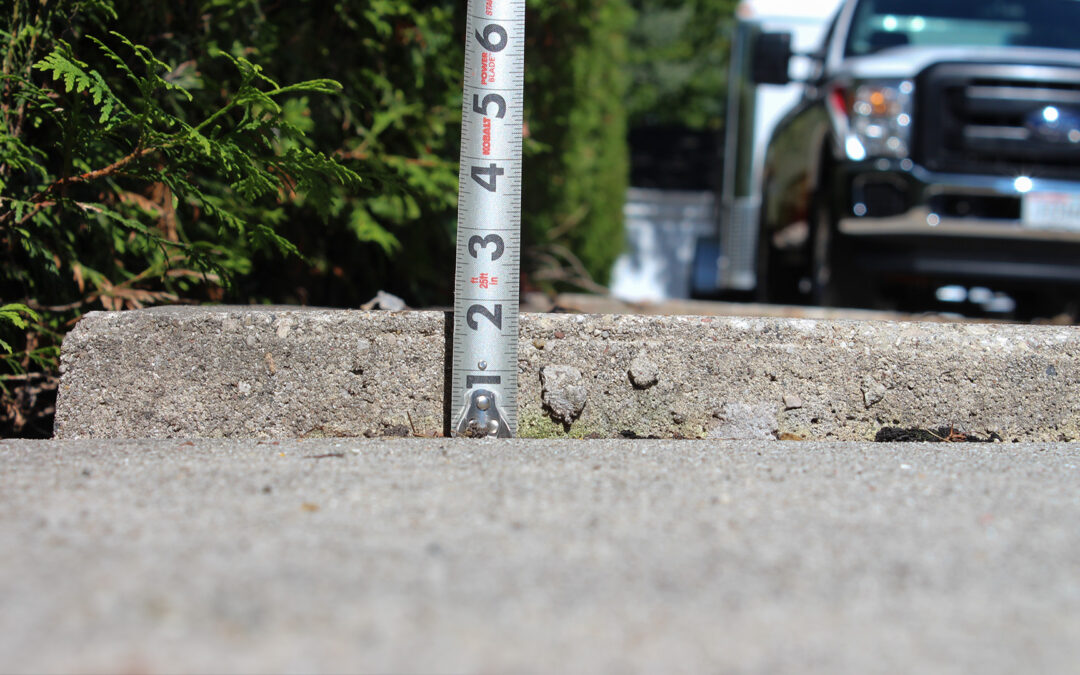
Every spring near Brainerd, homeowners walk outside and notice something is off. A section of the driveway has shifted. The sidewalk has a lip that wasn’t there before. A patio slab is sitting noticeably higher or lower than the one next to it.
This is one of the most common problems homeowners face after a long Minnesota winter. Uneven concrete after snow melt is not just an eyesore. It can become a tripping hazard, cause water to drain toward your home, and lead to more expensive repairs down the road if ignored.
The good news is that you have options. This guide walks you through why it happens, what the warning signs are, and what you can do about it.
Key Takeaways
- Freezing and thawing cycles are the main reason concrete shifts and becomes uneven near Brainerd.
- Uneven concrete can create tripping hazards and water drainage problems around your home.
- Some minor issues can be addressed early, but most shifting requires professional repair.
- Waiting too long to fix uneven concrete usually makes the damage worse and more costly.
- A licensed masonry contractor can assess the damage and recommend the right fix for your specific situation.
Why Concrete Shifts After Snow Melt
Minnesota winters are tough on concrete. The ground around Brainerd freezes and thaws repeatedly throughout the season. Each time water in the soil freezes, it expands. That expansion pushes up against whatever is sitting on top of it, including your driveway, sidewalk, or patio.
When temperatures rise and the ground thaws, the soil settles back down. But it doesn’t always settle evenly. Over several seasons, this cycle causes concrete slabs to shift, crack, and settle to different heights than they originally were.
Other Factors That Make It Worse
The freeze-thaw cycle is the main cause, but other factors can accelerate the problem. Poor drainage that allows water to pool near your concrete gives moisture more opportunity to seep into the ground. Tree roots growing beneath slabs can also push them out of position. Soil that was not properly compacted when the concrete was first poured is more likely to shift over time.
Deicing salts used during winter can break down the surface of concrete, making it more vulnerable to cracking. If you use a lot of salt on your driveway or walkways, you may notice surface deterioration and uneven settling.
Warning Signs to Watch For This Spring
Catching the problem early gives you more options and can save you money. After the snow clears near Brainerd, take a close look at your concrete surfaces. You don’t need special tools, just a careful eye.
Common Signs Your Concrete Has Shifted
- One slab sits noticeably higher or lower than the one next to it.
- Cracks have appeared or widened since last fall.
- Water puddles near your foundation or along your walkway instead of draining away.
- You can feel or see a bump or lip as you walk across the surface.
- The concrete near your garage door no longer lines up flush with the floor inside.
Even a one-inch height difference between slabs is enough to cause a serious trip-and-fall. According to the National Floor Safety Institute, falls account for over 8 million emergency room visits each year in the United States. Uneven walkways and driveways are a common contributor to those numbers.
What You Can Do About It
Once you spot uneven concrete after snowmelt, you have a few options depending on the severity. Minor surface cracks can sometimes be filled with a concrete caulk or crack filler available at hardware stores. These products work best on small, stable cracks that haven’t shifted much.
For slabs that have actually lifted or sunk, you need a more involved fix. Two of the most common professional repair methods are mudjacking and polyurethane foam lifting. Both involve injecting material beneath the slab to raise it back to its original level. These methods are typically faster and less expensive than tearing out and replacing the slab entirely.
When Replacement Makes More Sense
In some cases, the concrete is too far gone to lift. If the slab is severely cracked, crumbling, or has shifted multiple times already, replacement may be the better long-term solution. A masonry professional can look at the condition of the concrete and the underlying soil and tell you which approach makes the most sense for your property. Learn more about concrete lifting vs replacement to understand which option fits your situation.
Homeowners near Brainerd should also think about drainage improvements at the same time. Fixing the concrete without addressing why the water is pooling there in the first place often means the problem comes back within a few seasons.
How to Prevent the Problem From Returning
After repairs are made, there are practical steps you can take to slow down future shifting. Make sure your gutters and downspouts direct water away from your concrete surfaces. Grade the soil near your walkways and driveway so that water flows away from your home rather than pooling at the edges of the slabs.
Reduce your use of rock salt during winter when possible. Sand or kitty litter can provide traction without the chemical breakdown that salt causes. You can also apply a concrete sealer every few years to reduce the amount of moisture the surface absorbs. If water is consistently pooling near your foundation, consider a professional waterproofing solution to address the root cause.
FAQ
Is uneven concrete dangerous?
Yes. A height difference of just half an inch to one inch between slabs is enough to catch a foot and cause a fall. This is especially important to address near entryways, steps, and high-traffic walkways.
Can I fix uneven concrete myself?
Small surface cracks can be patched with products from a hardware store. But if slabs have actually shifted or sunk, that’s a job for a professional. Attempting to lift or stabilize a slab without the right equipment can make the situation worse.
How long does slab lifting take?
Most polyurethane foam lifting jobs take just a few hours. Mudjacking may take slightly longer. In most cases, you can use the surface again the same day or the day after, depending on the method used. Learn more about how much concrete lifting costs and what factors affect the price before you schedule a repair.
Does homeowners’ insurance cover uneven concrete?
Standard homeowners’ insurance typically does not cover concrete settling from freeze-thaw cycles. It’s considered gradual damage. However, if the shift was caused by a sudden event, such as a burst pipe, coverage may apply. Check with your insurance provider to understand your specific policy.
How soon after snow melt should I get the concrete inspected?
As soon as the ground thaws and you can clearly see your surfaces, it’s a good time to walk the property and look for changes. Scheduling an inspection in early spring gives contractors more time to complete repairs before summer, when schedules tend to fill up quickly. You can also use the winter months to get ahead of the process — find out why winter is the best time to plan outdoor projects before the busy season hits.
Talk to a Local Expert Near Brainerd
Uneven concrete after snow melt is a problem that doesn’t fix itself. The longer you wait, the more the ground shifts and the more the damage spreads. Small issues become bigger ones, and what might have been a simple lift turns into a full replacement.
If you’ve noticed shifting, cracking, or settling on your driveways, walkways, or patios this spring, reach out to Northland Companies. They serve homeowners in the Brainerd area and can assess the condition of your concrete and recommend a repair plan that fits your situation. Visit northland-companies.com or contact them directly to schedule a consultation before the summer season gets busy.