
If you are thinking about insulating your home, you have likely come across two popular options: spray foam and fiberglass. Both can help keep your home comfortable and lower your energy bills, but they work in very different ways. Knowing what sets them apart can help you make the right choice for your home and budget.
Key Takeaways
- Spray foam creates an air seal; fiberglass does not.
- Spray foam has a higher R-value per inch than fiberglass batts.
- Fiberglass is more affordable upfront but may cost more over time in energy loss.
- Spray foam is better for hard-to-reach areas and irregular spaces.
- Fiberglass is a common choice for standard wall cavities and attics.
- The right choice depends on your home’s layout, climate, and goals.
How Each Type of Insulation Works
Understanding how each material works is the first step. Spray foam and fiberglass both slow down heat transfer, but they do it differently. That difference matters a lot when it comes to real-world performance.
Spray Foam Insulation
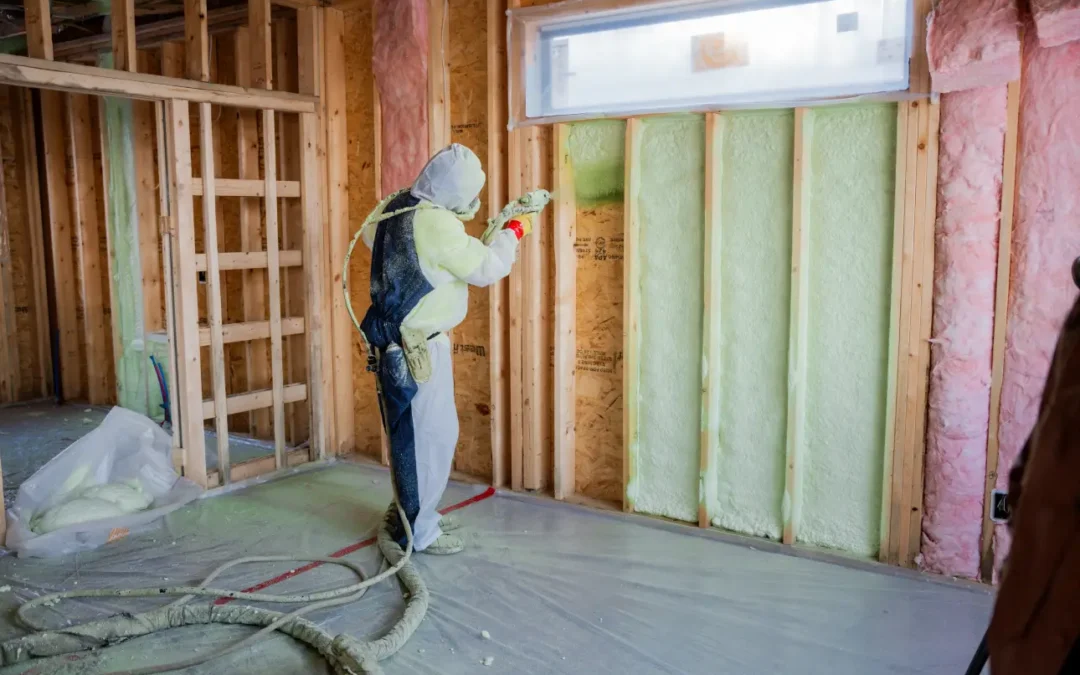
Spray foam is applied as a liquid and expands into a solid foam. It fills gaps, cracks, and irregular spaces as it sets. There are two main types: open-cell and closed-cell spray foam.
Open-cell spray foam is softer and less dense. It has an R-value of around 3.5 to 4 per inch. Closed-cell spray foam is denser and more rigid. It has an R-value of around 6 to 7 per inch, making it one of the highest-performing insulation materials available.
One major advantage of spray foam is that it creates an air barrier. Air leaks account for a large portion of energy loss in homes, sometimes up to 40 percent, according to the U.S. Department of Energy. By sealing those leaks, spray foam can significantly reduce heating and cooling costs.
Fiberglass Insulation
Fiberglass insulation is made from tiny glass fibers. It comes in batts, rolls, or loose-fill form. Batts are the pink or yellow strips you often see in attics and walls. Loose-fill fiberglass is blown in using special equipment.
Fiberglass batts typically have an R-value of around 2.2 to 2.7 per inch. That is lower than spray foam, but fiberglass can still be effective when installed correctly in the right areas.
Unlike spray foam, fiberglass does not seal air gaps on its own. Air can still move through and around fiberglass insulation. That means you may need additional air sealing to get the best results.
Performance and Energy Efficiency
When comparing spray foam and fiberglass insulation, performance is where the differences really stand out. Spray foam consistently scores higher on energy efficiency tests, mainly because of its ability to block air movement.
Where Each One Performs Best
Spray foam works well in hard-to-reach areas, such as crawl spaces, rim joists, and around pipes or irregular framing. It is also a strong choice for new construction where maximum efficiency is a priority.
Fiberglass performs well in standard stud-framed walls and open attic spaces where it can be laid flat without obstruction. It is widely used across the United States and is the most common insulation type in existing homes.
If your home has older construction, gaps around window frames, or drafty areas, spray foam may outperform fiberglass by a wide margin. For a well-sealed newer home with standard cavities, fiberglass may do the job at a lower cost.
Installation and Practical Considerations
Installation is another major difference between spray foam and fiberglass insulation. Each material requires a different approach, tools, and skill level.
What Installation Looks Like
Fiberglass batts are often considered a DIY-friendly option. You cut them to size and press them between studs or joists. However, improper installation, such as compressing the batts or leaving gaps, can significantly reduce its effectiveness.
Spray foam requires professional installation. The two-part chemical mixture must be applied at the right temperature and thickness. Closed-cell spray foam especially needs trained technicians to apply it safely and correctly. Once it cures, it is very durable and long-lasting.
Both materials have pros and cons when it comes to installation. Fiberglass is faster and easier to put in, but spray foam tends to last longer and perform better in complex spaces.
FAQ Section
Is spray foam insulation better than fiberglass?
Spray foam generally performs better in terms of air sealing and R-value per inch. However, fiberglass can still be a solid choice for standard wall and attic installations when installed properly. The best option depends on your specific home and goals.
Can you use spray foam and fiberglass together?
Yes, many homeowners and contractors use both in the same home. For example, you might use spray foam to seal rim joists and crawl spaces, then use fiberglass in the attic floor. Combining the two can improve overall performance without a high added cost.
How long does each type of insulation last?
Closed-cell spray foam can last the lifetime of the building when properly applied. Fiberglass insulation typically lasts 15 to 30 years, though it can lose effectiveness if it gets wet or becomes compressed over time.
Does spray foam insulation help with moisture control?
Closed-cell spray foam acts as a vapor barrier and resists moisture. This makes it useful in basements, crawl spaces, and other areas where moisture is a concern. Open-cell spray foam is not moisture-resistant and should not be used in areas prone to water exposure.
Which insulation is better for an older home?
Older homes often have more air leaks and irregular framing. Spray foam is often a better fit because it seals gaps as it expands. It can address the specific issues that fiberglass batts cannot fully handle in aging construction.
Make the Right Choice for Your Home
The difference between spray foam and fiberglass insulation comes down to performance, application, and your home’s specific needs. Spray foam offers superior air sealing and a higher R-value per inch. Fiberglass is more budget-friendly upfront and works well in standard spaces when installed correctly.
Neither option is perfect for every situation. The best approach is to have a professional evaluate your home and recommend the right solution based on your goals.
If you are ready to improve your home’s comfort and energy efficiency, contact Northland Companies today. Our team can help you understand your options and make sure the job is done right the first time. Visit northland-companies.com to get started.