
You wake up after a warm stretch of weather and find water on your basement floor. The snow is gone, but now you have a soggy mess inside your home. This is a common problem for homeowners in Brainerd, Crosslake, Nisswa, and the surrounding lakes area.
The cause is not always a cracked wall or a broken sump pump. In many cases, the problem starts outside. If the concrete around your home is slanted toward your foundation instead of away from it, snowmelt has nowhere to go except straight into your basement.
The good news is that this is fixable. Concrete lifting can correct the slope and send water away from your home instead of into it.
Key Takeaways
- Snowmelt can flood your basement when concrete slopes toward your foundation.
- Driveways, sidewalks, and patios can shift over time, creating drainage problems.
- Concrete lifting raises and re-levels sunken slabs without full replacement.
- Fixing the slope early prevents bigger water damage and foundation issues later.
- Northland Companies serves homeowners in Brainerd, Crosslake, Nisswa, and nearby areas.
Why Snowmelt Sends Water Into Your Basement
When temperatures rise after a Minnesota winter, snow melts fast. That water has to go somewhere. If the ground and concrete around your home direct that water toward your foundation, it collects along the base of your house. From there, it finds every small crack and gap it can.
Basement water after snow melts is not random. It follows the path the land and concrete give it. If that path leads to your home, your basement fills up.
How Concrete Shifts and Creates a Slope Toward Your Home
Concrete does not stay flat forever. Over time, the soil underneath compresses or erodes. Frost heaves during cold winters push slabs up and down. When slabs sink on one side, they tilt. If the low side faces your house, water runs right toward your foundation.
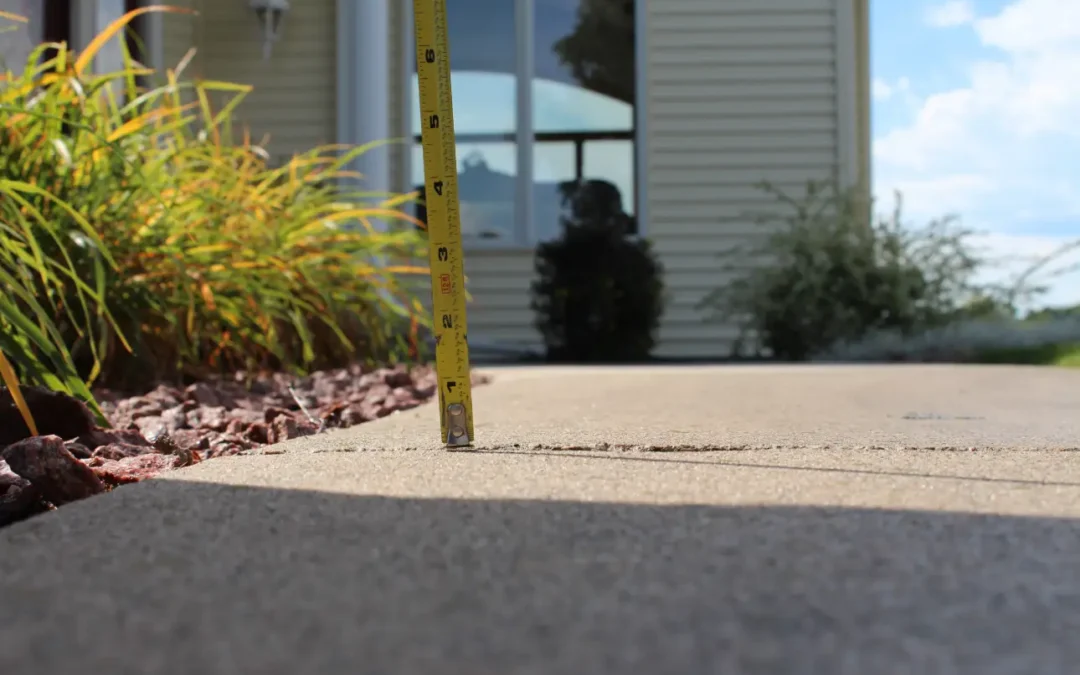
This happens with driveways, walkways, patios, and garage aprons. You may not notice the slope by eye. But even a small tilt, just one or two inches over ten feet, is enough to funnel hundreds of gallons of snowmelt toward your home during a thaw.
Signs Your Concrete Is Slanted Toward Your House
You do not need special tools to check for this. There are some easy ways to spot the problem before the next melt season hits.
What to Look For Around Your Foundation
- Puddles that form near your foundation after rain or snowmelt.
- Wet soil right up against your house, while the rest of the yard is dry.
- Water stains or damp spots on your basement walls near floor level.
- A visible gap between your foundation and a concrete slab that has pulled away and tilted.
- Concrete that looks uneven or has one edge clearly lower than the other.
If you see any of these signs, the slope of your concrete may be sending water straight into your home. This is a problem worth addressing before spring snowmelt or summer rains make it worse.
How Concrete Lifting Fixes the Problem
Concrete lifting, sometimes called slabjacking or mudjacking, raises sunken or tilted concrete slabs back to the correct position. A contractor drills small holes in the slab and pumps a material underneath it. That material fills the voids in the soil and restores the slab to proper slope.
Once the slab is level, or better, slightly sloped away from your foundation, water drains in the right direction. Snowmelt flows away from your home instead of pooling against it.
Why Concrete Lifting Is Worth It
Replacing concrete is expensive and takes time. Lifting costs less and gets done faster. Most concrete lifting jobs wrap up in a few hours. You can usually use the surface again the same day.
Beyond cost and speed, lifting also gets to the root of the drainage problem. It does not just patch a crack or add a drain. It corrects the slope that was causing water to move toward your house in the first place.
For homeowners in Brainerd, Crosslake, and Nisswa, where winters are long and snowmelt is significant, fixing a bad slope before spring arrives is one of the best ways to protect your home.
Other Factors That May Be Contributing
Concrete slope is a major cause of basement water after snowmelt, but it is not the only one. While you are looking into concrete lifting, it is worth checking a few other things.
Additional Sources of Basement Water
- Gutters and downspouts that dump water near your foundation instead of directing it away.
- Landscaping that slopes toward your home rather than away from it.
- Window wells that collect snowmelt and allow water to seep through basement windows.
- Foundation cracks that let water in even when drainage is decent.
Fixing your concrete slope will help, but addressing all of these at once gives you the best protection. If you are not sure where your water is coming from, a professional inspection can help you find the source.
Frequently Asked Questions
Can a small slope really cause that much water in my basement?
Yes. Even a slight tilt toward your foundation can direct a large volume of water against your home during snowmelt. A one-inch drop over several feet is enough to cause consistent water problems.
How do I know if my concrete needs lifting or replacing?
If the slab is structurally sound but just sitting too low or at the wrong angle, lifting is usually a good option. If the concrete is crumbling, cracked, or severely deteriorated, replacement may be needed. A contractor can look at it and tell you which route makes sense.
Does concrete lifting work in Minnesota’s cold climate?
Yes. Concrete lifting is done regularly in northern climates. The freeze-and-thaw cycles that cause slabs to shift also make lifting a useful repair option here. Northland Companies has experience working with concrete in the Brainerd lakes region.
How long does concrete lifting last?
Results vary depending on soil conditions and the quality of drainage management after the repair. In many cases, lifted concrete stays in place for years. Keeping water away from the area and maintaining good drainage helps extend the results.
Is there anything I can do before spring to prevent basement flooding?
You can shovel snow away from your foundation so it does not melt directly against your home. You can also check that your downspouts are pointed away from the house. For a long-term fix, concrete lifting should be scheduled when conditions allow for safe work.
Stop the Water Before It Becomes a Bigger Problem
Water in your basement after snowmelt is a sign that something is directing water toward your home instead of away from it. In many cases, a sunken or tilted concrete slab is the cause. Concrete lifting corrects the slope and protects your foundation from repeated water intrusion.
If you are in Brainerd, Crosslake, Nisswa, or anywhere in the surrounding lakes area, Northland Companies can help. Their team handles concrete lifting, masonry, and landscape work, so you get a complete solution for drainage and outdoor concrete issues.
Do not wait for another thaw to find more water in your basement. Contact Northland Companies today to schedule an assessment and get the right fix in place before the next snowmelt season.